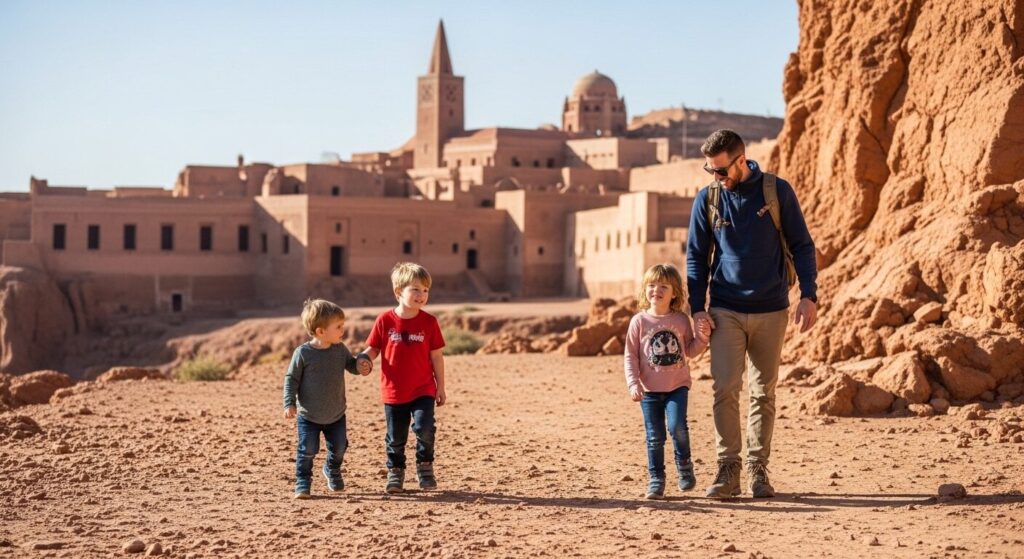
Planning a family trip to Morocco requires 6 core decisions: choosing the right season, selecting kid-friendly cities, booking appropriate accommodation, arranging transport, preparing for cultural differences, and planning activities that engage children.
Morocco ranks among the most accessible family destinations outside Europe – a 3-4 hour flight from most European capitals – with diverse landscapes, a welcoming culture, and a tourism infrastructure that has improved significantly over the past decade.
When to Visit Morocco with Kids
Spring (March–May) and autumn (September–October) are the 2 best seasons for a family trip to Morocco. Daytime temperatures during these months range from 20°C to 28°C in cities like Marrakech and Fes, making long walks through medinas and outdoor activities comfortable for children of all ages.
Summer months – particularly June through August – bring intense heat to inland cities, with temperatures regularly exceeding 40°C in Marrakech. Families who must travel in summer benefit from focusing on cooler coastal destinations like Essaouira or Agadir, where Atlantic breezes keep temperatures manageable.
Winter (November–February) suits families who prefer fewer crowds. Southern Morocco remains mild, but the Atlas Mountains can experience heavy snowfall. Pack layers regardless of the season – temperature swings between day and night are significant across all regions.
How Safe Is Morocco for Families?
Morocco is a safe country for family travel. Moroccans are notably welcoming, and their hospitality is widely documented among experienced family travellers. The country has a visible police presence in tourist areas, and the vast majority of families report no security incidents during their visits.
The most practical safety concern in major medinas is moped traffic. Narrow streets in Marrakech and Fes see motorbikes moving at speed with little warning, so keeping young children close and within reach at all times is essential.
Standard precautions apply: use a money belt for valuables, stick to bottled water, choose freshly cooked meals over street food for young children, and carry a basic first-aid kit. Private clinics and international hospitals in Marrakech, Casablanca, and Rabat provide the best care for tourists requiring medical attention. Emergency numbers: police (190), ambulance (15), tourist police (150).
The Best Cities to Visit with Children
Marrakech
Marrakech offers the highest concentration of family-friendly experiences in Morocco. The Jardin Majorelle provides a calm, shaded escape from the city’s intensity, with wide paths suitable for young children.
Moroccan cooking classes rank among the most effective family activities – children receive their own workstations and ingredients, and the hands-on format keeps even young participants engaged for 2–3 hours.
The Djemaa el-Fna square comes alive in the late afternoon with musicians, acrobats, and storytellers – an open-air spectacle that requires no admission and captivates children and adults equally.
Chefchaouen
Chefchaouen is the blue mountain city in northern Morocco. Its pedestrian-friendly blue-washed streets are entirely walkable, free of heavy traffic, and visually striking for children.
For families arriving from Europe, Chefchaouen serves as an ideal first stop – its relaxed pace and manageable scale allow children to acclimate to Moroccan culture before encountering the intensity of Marrakech or Fes.
Essaouira
Essaouira is a coastal city on Morocco’s Atlantic shore, known for its constant winds, walled medina, and broad sandy beach.
The compact medina is navigable without maps, and the city’s relaxed atmosphere makes it one of the most stress-free stops on any Morocco family itinerary.
Fes
Fes contains the world’s largest car-free urban area – the Fes el-Bali medina – and is best experienced with a knowledgeable guide.
The Bou Inania Medersa and the famous tanneries provide genuine historical context for older children. Expect full days on foot; comfortable walking shoes are non-negotiable.
How to Get Around Morocco with Kids
Transport choice significantly affects the quality of a family trip to Morocco. Renting a car is the most practical option for families, as it allows travel at your own pace and eliminates the challenge of managing children on shared public transport.
For longer intercity routes – particularly the journey from Marrakech to the Sahara Desert region of Merzouga – a private driver or guided tour is the most efficient option. As car seats are not widely available in Moroccan taxis, families who plan to use taxis regularly benefit from bringing a portable booster seat.
Trains connect Casablanca, Rabat, Fes, and Tangier reliably and at low cost. They are air-conditioned and suitable for children, though they do not serve the south of the country.
The Sahara Desert: The Highlight Every Family Remembers
The Sahara Desert experience is the single activity most consistently described as a trip highlight by families who visit Morocco. Camel rides across the Erg Chebbi dunes near Merzouga, overnight stays in desert camps, sandboarding, fossil hunting, and stargazing provide experiences children retain long after the trip ends.
Planning this part of the journey requires advance booking and careful selection of operator. Families looking for child-appropriate desert camps with structured activities find that working with an established local provider makes the experience significantly smoother.
Morocco Desert Tours with AtlasTripTour, for instance, specialize in guiding families through the Sahara with private transport from Marrakech and accommodation designed for comfort rather than just novelty.
Many desert tours include Berber music, storytelling, and stargazing – educational experiences that complement the physical excitement of dune riding and sandboarding.
What to Pack for a Family Trip to Morocco
Packing correctly for Morocco reduces friction considerably, particularly with young children. Morocco’s climate varies sharply across regions – a single trip can require winter jackets in the Atlas Mountains, sun hats in Marrakech, and layers for the desert, where nights turn cold despite hot daytime temperatures.
7 items every family should pack for Morocco:
- Lightweight, breathable clothing that covers shoulders and knees for city visits
- Comfortable walking shoes for cobbled medina streets
- A baby carrier rather than a stroller – medina streets are uneven and narrow
- Sunscreen and sun hats for desert and city exposure
- A basic first-aid kit including antiseptic, pain relievers, and any prescription medication
- Bottled water – carry extra when travelling between cities
- A portable booster seat if travelling with children under 10
Modest dress norms apply throughout Morocco. Covering shoulders and knees is expected, particularly for girls and women, and public displays of affection are not culturally appropriate.
Practical Tips for Keeping Kids Engaged in Morocco
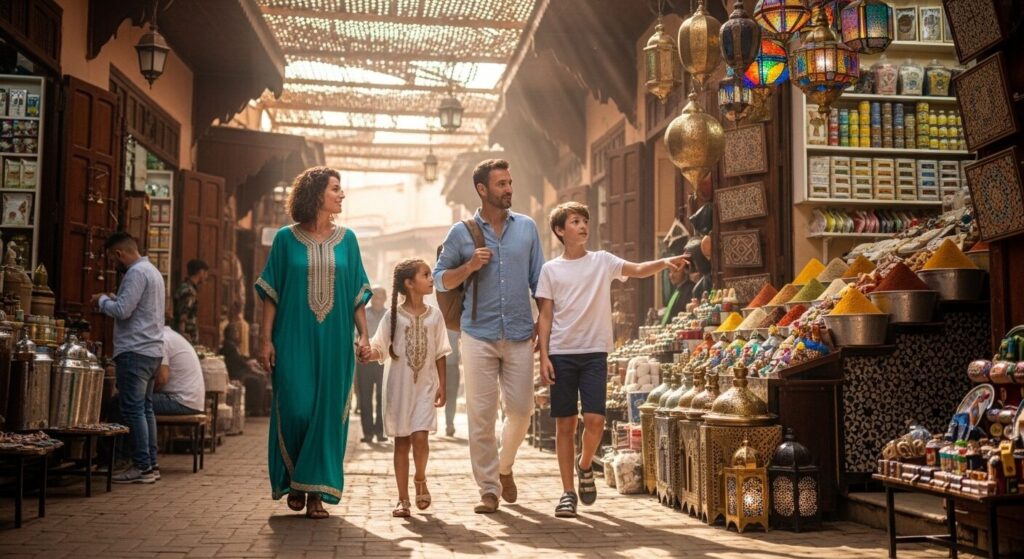
Involve Children in the Planning
Children who participate in selecting activities show greater engagement and fewer complaints during long travel days. Assign each child one “chosen activity” per city – this creates personal investment in the itinerary.
Teach Basic Arabic or French Phrases
Teaching children simple Arabic or French words – like “Shukran” (thank you) or “Salam” (hello) – creates more meaningful interactions with locals and gives children a sense of accomplishment during the trip.
Prepare for Moroccan Hospitality
Moroccans express genuine warmth toward children, and it is common for strangers – particularly women – to touch a child’s hand or cheek as a sign of affection. Preparing children for this cultural norm in advance reduces their discomfort during unexpected interactions.
Choose Riads with Pools
Many traditional riads in Marrakech and Fes have central courtyards with plunge pools. These provide a valuable retreat after long mornings of walking, and give children a familiar, contained space to decompress.
A Suggested 7-Day Family Itinerary for Morocco
| Day | Destination | Key Activities |
| 1–2 | Marrakech | Jardin Majorelle, Djemaa el-Fna, cooking class |
| 3 | Atlas Mountains | Day hike or scenic drive through Berber villages |
| 4 | Merzouga (Sahara) | Camel ride, desert camp overnight |
| 5 | Dades / Todra Gorge | Gorge walk, drive through Valley of Roses |
| 6 | Ait Benhaddou | UNESCO kasbah visit |
| 7 | Marrakech | Souk exploration, departure |
This itinerary covers Morocco’s 3 most distinct landscapes – city, mountain, and desert – within a manageable week. Families with younger children can reduce driving days by removing the Atlas detour and spending an extra night in Marrakech.
Final Takeaway
A family trip to Morocco is achievable without extensive travel experience. The country’s combination of dramatic landscapes, a deeply child-welcoming culture, and a developed tourist infrastructure makes it suitable for families with children from age 3 upward.
Book transport and desert accommodation well in advance – especially for school holiday periods. Focus the itinerary on 3–4 destinations rather than attempting to cover the entire country. And prioritize the Sahara: it is the experience children talk about for years afterward.
For families planning their first family trip to Morocco, a guided itinerary removes the logistical burden of navigating long desert routes independently – leaving more energy for the moments that actually matter.