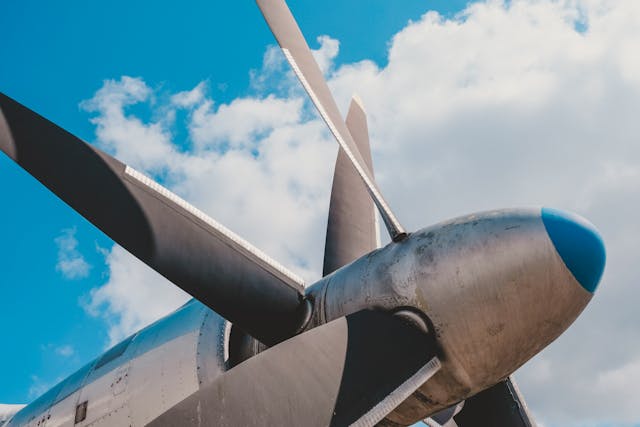
Think about this for a moment: just over a century ago, the Wright brothers managed to keep a fragile wooden aircraft airborne for twelve seconds. Fast forward to today, and we’re booking overnight flights to the other side of the planet without giving it a second thought. The aviation industry’s transformation has been nothing short of extraordinary. What started as a bold experiment with fabric wings and bicycle parts has blossomed into a sophisticated global network connecting millions of travelers daily.
Revolutionary Engine Technology and Fuel Efficiency
When you look at how aircraft engines have evolved, you’re really looking at the heart of aviation’s transformation. Those early piston engines from the 1940s eventually made way for turbojets in the 1950s, which then gave ground to the more efficient turbofan engines that power most commercial flights today. What’s fascinating is how modern engines blend advanced materials like titanium alloys and ceramic composites, materials that laugh in the face of extreme temperatures while keeping weight down. These engineering masterpieces achieve fuel efficiency levels that would’ve seemed impossible just decades ago, thanks to sophisticated computer systems constantly optimizing combustion and airflow on the fly.
Advanced Materials and Aerodynamic Design
The shift toward composite materials has completely reimagined how we build aircraft, creating machines that are simultaneously lighter, stronger, and more fuel-efficient than anything that came before. Carbon fiber reinforced polymers now make up roughly half of modern aircraft structures, appearing in everything from wings to fuselages to tail sections. What makes these materials special isn’t just one thing, they offer incredible strength-to-weight ratios while shrugging off corrosion and fatigue far better than traditional aluminum alloys. The Boeing 787 Dreamliner and Airbus A350 showcase this composite revolution beautifully, achieving weight reductions that directly translate into better range and efficiency.
Digital Avionics and Flight Management Systems
Step into a modern airliner’s cockpit, and you’ll find it bears little resemblance to the instrument-packed panels from just a few decades back. Today’s cockpits have transformed into sleek digital command centers where glass displays have replaced hundreds of mechanical gauges and switches with intuitive touchscreen interfaces. Fly-by-wire systems now interpret what pilots want and translate those inputs through computers that optimize control surface movements, boosting safety while reducing the mental workload during every phase of flight. Advanced flight management systems are constantly calculating optimal routes, altitudes, and speeds, factoring in weather patterns, air traffic, and fuel efficiency in real-time.
Ground Operations and Airport Infrastructure Innovations
While flashy airborne technology grabs most of the headlines, innovations happening on the ground have been just as crucial to reshaping the travel industry. Modern airports function as intricate ecosystems where ground handling efficiency ripples through the entire system, affecting everything from costs to passenger satisfaction. Sophisticated baggage handling systems, complete with automated conveyors, scanners, and sorting equipment, process millions of bags daily with impressive accuracy. Advanced pushback tractors and ground support equipment increasingly feature electric and hybrid powertrains, cutting emissions and noise around terminals.
When it comes time to position aircraft at gates and hangars, ground crews depend on airplane tugs that deliver the precise maneuverability needed in tight spaces while safely handling aircraft worth tens of millions of dollars. Automated gate management systems orchestrate the intricate dance of arriving and departing aircraft, trimming delays and maximizing how terminals get used. Ground power units and pre-conditioned air systems let aircraft shut down their engines at the gate while still maintaining electrical power and climate control, a change that significantly cuts fuel burn and emissions during ground time.
These behind-the-scenes improvements enable the rapid turnarounds that make low-cost carriers’ business models work, ultimately helping keep fares competitive. The industry’s push toward electric ground support vehicles and sustainable airport operations keeps accelerating as everyone works toward ambitious carbon reduction goals.
Passenger Comfort and Cabin Technology
Aircraft cabin design has come a long way from the basic transportation function of early commercial aviation. Modern pressurization systems maintain cabin altitudes equivalent to 6, 000-8, 000 feet instead of the 8, 000-10, 000 feet that were standard in older aircraft, meaningfully reducing passenger fatigue and those dreaded jetlag symptoms. Advanced air filtration equipped with HEPA filters removes 99. 97% of airborne particles while cycling the entire cabin’s air volume every two to three minutes, something passengers have become particularly conscious of in recent years.
Safety Systems and Collision Avoidance Technology
Aviation’s enviable safety record didn’t happen by accident, it’s the result of relentless technological innovation and systematic implementation of multiple backup systems. The Traffic Collision Avoidance System provides automatic warnings and resolution advisories whenever aircraft get too close to each other, effectively preventing mid-air collisions.
Ground Proximity Warning Systems combine radar altimeters and GPS data to alert pilots about potential terrain conflicts, virtually eliminating what used to be called controlled flight into terrain accidents. Weather radar has evolved from simple precipitation detection to sophisticated Doppler systems that identify wind shear, turbulence, and other atmospheric hazards lurking ahead.
Conclusion
The technological leaps that have reshaped aircraft over the past century stand as remarkable evidence of human creativity and our persistent drive to push beyond what seems possible. From groundbreaking engine designs and cutting, edge materials to sophisticated digital systems and comprehensive safety features, each innovation has played its part in making air travel faster, safer, more comfortable, and more accessible to everyday people.
These technologies have fundamentally altered global commerce, tourism, and cultural exchange, connecting our world in ways that would’ve seemed like pure fantasy to previous generations. As the industry continues its evolution with sustainable fuels, electric propulsion, and autonomous systems on the horizon, the next chapter of aviation looks every bit as revolutionary as those that came before.