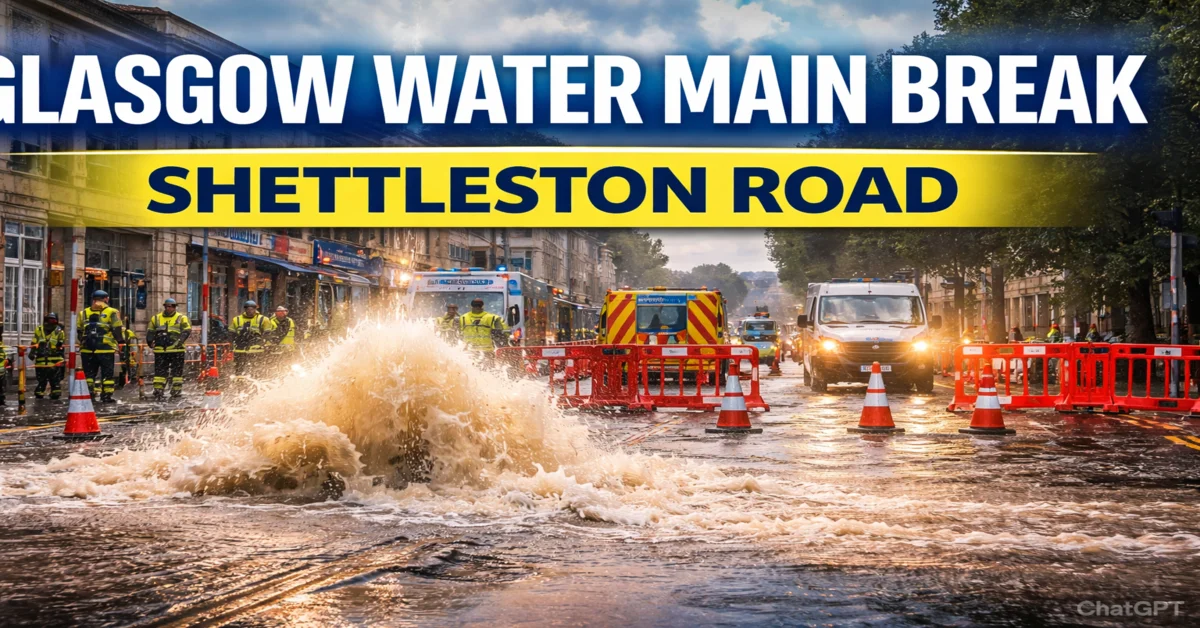
On the morning of May 29, 2025, a major water main ruptured on Shettleston Road, triggering street flooding, loss of supply across nearby postcodes, and a fast-moving emergency response. The rupture quickly became the central story for residents and commuters as crews mobilised to isolate the damaged section, manage traffic,c and restore safe drinking water.
This event matters because it affects everyday life: homes, businesses, schools, and public transport rely on a stable supply that was suddenly interrupted. Quick, transparent updates and clear practical guidance helped ease immediate concerns and reduce confusion — and that’s exactly what this post aims to deliver: calm, clear, expert-backed guidance plus local context so you can act with confidence.
RELATED: Konversky: The Future of Human-Centered Digital Productivity
Where Did the Water Main Break Occur?
The rupture was reported on Shettleston Road close to the junction with St Mark Street, in Glasgow’s east end. That stretch is a busy urban corridor — vehicles, buses, and nearby businesses were directly in the path of floodwater and repair works. Local updates identified affected sections running between nearby side streets and highlighted the need for traffic control while crews worked.
A map overview showed most disruption concentrated in the G31–G32 postcode corridor, with diversions routing traffic around the affected stretch. Nearby landmarks and public transport stops were used as reference points for residents checking restoration progress and for crews organising safe cordons and equipment access.
What Caused the Shettleston Road Water Main Burst?
Pipes age, ground shifts happen, and pressure changes or external damage can trigger a sudden distribution main failure. In many urban systems, older cast-iron or brittle joints are more vulnerable; the rupture on Shettleston Road likely involved an ageing section that finally gave under operational stresses. Engineers often point to a combination of wear-and-tear and isolated pressure surges as the immediate triggers.
Weather and environmental factors — from rapid freeze-thaw cycles to heavy vehicle vibrations above buried mains — can accelerate deterioration. Where there have been prior repairs on a line, those joints can also be stress points. Local records indicate past maintenance in the corridor, and crews routinely inspect for weak spots as part of preventative maintenance programmes.
Timeline of Events
Residents first noticed flooding and low pressure in the early morning and reported the issue via customer service channels. Within an hour the utility’s emergency crews were on site assessing the damage and isolating valves to limit water loss and protect the wider network. Quick notification and mobilisation are hallmarks of effective incident response.
By mid-morning, temporary road closures and traffic diversions were in place while excavation and repair began. Over the next hours technicians worked to locate the exact failure, expose the pipe and carry out emergency repairs. Authorities published periodic updates so residents could track restoration steps and any expected times for return of supply.
Immediate Impact on Residents and Businesses
Many households experienced either a complete loss of water or reduced pressure; others reported discoloured (brown or cloudy) water when supplies were returned, a common result of sediment disturbance in pipes. This situation can be unnerving, but guidance on flushing and safety quickly addressed most concerns.
For small businesses — cafés, retail shops and services along the affected stretch — the combined effects of closures, water dependency and reduced footfall meant immediate financial strain. Many owners had to pause hot-food services or limit operations until the supply and safe drinking standards were restored. The quick response from repair crews and clear local messaging reduced the downtime for most.
Road Closures, Traffic Diversions & Public Transport Changes
To keep the site safe, the council implemented staged road closures along the worst-affected sections of the thoroughfare, rerouting traffic and setting up clearly signed diversions. Emergency traffic management teams coordinated with transport operators to keep the flow moving around the repaired area.
Bus routes that normally used Shettleston Road were temporarily diverted, with operators posting alternative stop information and timetables. Drivers were advised to use parallel routes and allow extra time; clear signage and staff presence at key junctions helped prevent bottlenecks while repair works continued.
Response from Authorities and Utility Services
The utility’s crews were first on scene to isolate the break, assess damage and begin repair works, following standard emergency operating procedures. Their public updates affirmed that technicians were working continuously to restore supply and ensure water quality testing would follow repairs. Residents were directed to official channels for verified progress updates and safety notices.
Meanwhile, the local authority managed traffic safety and public messaging, while the environmental regulator monitored potential impacts on drainage and nearby waterways. This multi-agency coordination ensured both public safety and environmental protections were considered during excavation and pumping operations.
Water Supply Restoration Process
Repair starts by isolating the damaged section to prevent further loss and to stabilise pressure across the wider network. After careful excavation, crews either patch the failed joint or replace a segment of pipe depending on the damage severity. The priority is to restore service to the largest number of customers safely and swiftly.
Once the physical repair is complete, engineers re-pressurise the line and conduct pressure testing to check for leaks. Flushing follows — scouring the newly disturbed pipeline to remove sediment — and water quality samples are taken and analysed to confirm the supply meets drinking water standards before a full return to normal service is announced.
Is the Tap Water Safe to Use?
Discolouration (brown or cloudy water) after a repair usually stems from loosened deposits in the pipeline. While unpleasant, it is generally not a health hazard if the water has passed quality tests; however, people are advised to avoid using discoloured water for drinking or cooking until it runs clear. Simple flushing of cold taps often clears the supply.
If discolouration persists or a taste/odour concern remains after flushing, homeowners should contact the utility’s helpline for guidance and to request water quality checks. Priority Service Customers (vulnerable households) were proactively contacted in many incidents to ensure additional support where needed.
What Residents Should Do During a Water Main Break
First, store a small emergency supply of clean water for drinking and basic hygiene — five litres per person is a practical starting point for short outages. Use bottled water for sensitive uses like baby formula until normal supply and clarity are confirmed. Conserving what water remains helps stabilise local pressure and eases the restoration process.
Second, avoid contact with large volumes of floodwater: it can contain sediments and contaminants. Protect appliances by turning off and disconnecting affected devices where safe to do so, and keep drains clear to prevent backflow. Report visible leaks, property damage and health concerns through the utility’s emergency line so they can prioritise vulnerable premises.
Business Impact and Insurance Considerations
Businesses should document any damage with photos, timestamps and receipts — this is essential for insurance claims and possible recovery grants. If stock or equipment was water-damaged, itemise losses and contact your insurer promptly to start the claims process. Many insurers accept digital evidence and will guide next steps.
For business interruption concerns, keep clear records of lost trading hours and communications with suppliers and customers. Some businesses may qualify for emergency relief or compensation depending on policy terms and local authority measures; working directly with your insurer and council liaison officer will speed outcomes.
Long-Term Infrastructure Concerns in Glasgow
This incident is a reminder that parts of any city’s water network can be decades old and need proactive replacement. National programmes aimed at reducing leakage and replacing older materials are central to preventing repeat incidents; investments in trunk mains, better monitoring and modern materials all reduce future risk.
Local plans often include scheduled mains replacements, targeted reinforcement near busy roads and improved telemetry for faster detection. Public input and political will are essential — community pressure, transparent investment plans and measurable targets lead to a resilient system that attracts confidence and reduces costly emergency repairs.
Community Reactions and Local Updates
Residents praised the speed of the on-site crews while also calling for clearer advance notice when possible. Social media channels provided rapid eyewitness updates and helped the community share resources such as bottled water and temporary hygiene kits for those most affected. Community spirit often shines brightest during these events.
Local groups and volunteers organised small support hubs that provided basic supplies and information, while neighbourhood associations liaised with the utility and council to prioritise vulnerable residents. These grassroots initiatives amplified official messaging and ensured practical help reached those in need quickly.
How to Stay Updated on the Glasgow Water Main Break Shettleston Road
The most reliable updates come from the utility’s local incident page and verified social accounts, which post live progress and safety advice; there’s also a helpline for urgent queries. Signing up for text or email alerts — where available — reduces uncertainty and helps residents plan.
The council publishes traffic notices and road closure maps, while the environmental regulator shares guidance if drainage or watercourse impacts are a concern. Following official channels and local transport operators ensures you receive accurate and timely instructions.
RELATED: Coerant: Your Ultimate Digital Transformation Partner
Frequently Asked Questions (FAQs)
Which areas were most affected?
The immediate impact centred on Shettleston Road and adjacent streets within the G31–G32 postcode area. Local updates described temporary pressure loss and outages across neighbouring neighbourhoods while repair works were underway.
How long will repairs take?
Repair times vary by damage severity. Emergency fixes to isolate and patch may take hours, while full replacement and testing can take longer — sometimes into the next day. Officials publish estimated restoration times as repairs progress.
Can I claim compensation?
Compensation depends on insurance policies and the cause/effect of damage. Document losses and contact both your insurer and the utility’s customer service; they can advise on claims and any potential compensation or hardship assistance.
Who do I contact for emergencies?
Use the utility’s 24/7 helpline for supply issues and your local council’s emergency contacts for road or drainage hazards. Priority Service Customers should reference pre-registered support arrangements for urgent needs.
Summary
This incident was disruptive but also instructive: fast, coordinated action restored service and protected public safety, while community solidarity helped the most vulnerable. Each event like this provides lessons that strengthen local resilience and underline the value of investment in modernised infrastructure.
If you live or work near Shettleston Road, bookmark the utility’s local incident page, save the emergency contact number and keep a small emergency water kit handy. Preparedness, clear official updates and community collaboration turn a crisis into a managed recovery — and that’s the compelling, positive takeaway from this event.