Dubai International Financial Centre Business Setup: Licenses, Process, Costs
Last Updated on March 5, 2026 by Abdul Basit
Dubai International Financial Centre Business Setup is the preferred route for financial institutions and professional service firms that require a highly regulated and internationally respected base in the UAE. Established in 2004, the centre operates under its own independent legal system based on English common law, making it structurally different from other free zones in Dubai.
At the core of Dubai International Financial Centre freezone business setup in UAE is a distinct framework: disputes are handled by DIFC Courts, and financial institutions are supervised by the Dubai Financial Services Authority (DFSA). This independent ecosystem is what gives the jurisdiction its global credibility.
Why Choose Dubai International Financial Centre Business Setup
Unlike multipurpose free zones, Dubai International Financial Centre company formation is designed specifically for finance and related professional services. Banks, asset managers, insurers, and advisory firms choose DIFC because it combines strict oversight with international standards.
The centre is located in central Dubai and positioned as a gateway to the Middle East, Africa, and South Asia (MEASA). It hosts hundreds of regulated entities alongside non-regulated firms such as law practices and consultancies. This clustering effect creates a financial ecosystem where institutions, advisors, and service providers operate in close proximity.
For businesses that depend on trust, transparency, and regulatory recognition, DIFC offers a framework aligned with global expectations rather than a simplified commercial model.
Activities Under Dubai International Financial Centre Freezone Company Formation
Activities in DIFC are divided into two categories: regulated and non-regulated.
Regulated businesses include banking, asset management, insurance, brokerage, Islamic finance, and investment advisory services. These activities require direct authorization from the DFSA and involve comprehensive compliance review.
Non-regulated firms — such as law firms, consultancies, family offices, training providers, and certain fintech startups — register through the DIFC Registrar of Companies (ROC) without DFSA supervision.
In addition, DIFC promotes innovation through a dedicated Innovation License aimed at fintech, blockchain, and digital asset ventures. This dual-track structure allows both large institutions and emerging firms to operate within the same financial district, each under the appropriate level of oversight.
Legal Framework Behind Dubai International Financial Centre Business Setup
DIFC was created by federal decree and functions under its own legal system, separate from the UAE civil code. Its courts apply English common law principles and are staffed by internationally experienced judges. Financial regulation is carried out by the DFSA, a recognized independent authority.
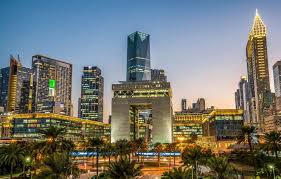
Physically, DIFC is a mixed-use district combining office towers, retail outlets, dining venues, and residential units. This integrated environment has transformed it into both a commercial and lifestyle hub, attracting thousands of registered companies.
Step-by-Step Dubai International Financial Centre Freezone Company Formation and Registration
The process for Dubai International Financial Centre free zone company setup is more comprehensive than in most UAE free zones, reflecting DIFC’s position as an international financial hub with an independent legal system and regulatory framework.
Available Legal Structures
The DIFC Registrar of Companies offers a broad range of legal forms:
- Private Company Limited by Shares (LTD)
- Public Company (PLC)
- Recognised Company (Branch)
- General Partnership (GP)
- Recognised Partnership (RP)
- Limited Partnership (LP)
- Recognised Limited Partnership (RLP)
- Limited Liability Partnership (LLP)
- Recognised Limited Liability Partnership (RLLP)
- Non-Profit Incorporated Organisation (NPIO)
- Foundation
- Recognised Foundation
The choice of structure determines liability, governance model, capital requirements, and documentation.
Registration Procedure Explained
The company formation process in DIFC typically unfolds in several structured stages:
1. Determining activity and regulatory status: the first step is defining the proposed business activity. At this stage, it is critical to determine whether the company will conduct regulated financial services (requiring approval from the Dubai Financial Services Authority – DFSA) or operate as a non-regulated entity (such as consultancy, holding company, or professional services firm). This distinction significantly impacts documentation and timelines.
2. Name reservation and initial application: applicants reserve the company name and submit an initial application to the DIFC Registrar of Companies. This includes details of shareholders, directors, ultimate beneficial owners (UBOs), and the intended activity.
3. Preparation and submission of incorporation documents: for newly incorporated entities (such as LTD, PLC, LLP, Foundation, etc.), the following documents are required:
- Memorandum and Articles of Association (company charter)
- Formal resolution on the establishment of the company signed by the shareholder(s)
- Shareholder and director appointment resolutions
- Constitutional documents specific to the chosen legal structure
For recognised entities (branches, recognised partnerships, recognised foundations), the parent company must submit:
- Certificate of incorporation
- Memorandum and Articles of Association (charter)
- Board resolution approving the DIFC registration
- Certificate of Good Standing (if required)
- Legalised corporate documents
All applicants must provide passport copies and proof of address. Corporate shareholders must also submit incorporation certificates, share registers, and ownership structure documentation.
4. Regulatory approval (if applicable): if the activity is regulated, the applicant must submit additional materials to the DFSA, including:
- Detailed business plan
- Compliance and AML policies
- Governance framework
- Risk management procedures
- Financial forecasts and capital adequacy calculations
This stage may involve multiple clarification rounds and interviews with the regulator.
5. Lease agreement and capital requirements: before final registration, the company must secure office space within DIFC. Physical presence is mandatory. Certain regulated entities must also deposit minimum share capital in accordance with DFSA rules.
6. Incorporation and license issuance: once approvals are granted and fees are paid, the Registrar issues the Certificate of Incorporation and commercial license.
7. Immigration and operational setup: after incorporation, the company registers for immigration purposes, opens its establishment card, and proceeds with residence visa applications for shareholders and employees.
Remote Option for Dubai International Financial Centre Company Formation
Much of the Dubai International Financial Centre business setup procedure can be initiated remotely. Applications are filed digitally, and documentation may be couriered where originals are required. Verification interviews may take place via video call.
However, certain steps — particularly bank account opening and visa processing — require physical presence in Dubai. In practice, most companies finalize the majority of incorporation before representatives travel to complete mandatory in-person formalities.
License Categories and Dubai International Financial Centre Freezone Business License Cost
In the Dubai International Financial Centre freezone business setup, licensing is structured around activity categories rather than simple “commercial” or “service” labels. The DIFC regime groups activities into regulatory classifications that reflect the type and level of oversight required. According to the official DFSA classification model, there are five main categories of activities — ranging from basic professional services to full financial services that demand comprehensive regulatory authorisation. These categories influence both the approval process and associated costs.
For firms offering regulated financial services (such as banking, asset management, fund operations, and insurance), approval must be obtained from the Dubai Financial Services Authority (DFSA). This process involves higher authorization fees, comprehensive compliance requirements, and ongoing supervisory charges. Meanwhile, non-regulated companies (including consultancies, professional services, family offices, and certain fintech startups) register directly with the DIFC Registrar of Companies (ROC) and incur comparatively lower upfront and renewal fees.
When budgeting for Dubai International Financial Centre freezone business license cost, several key variables must be taken into account:
- Registration fees – companies in DIFC typically start at around AED 10,000 for initial setup.
- License fees – these usually begin at approximately AED 15,000 depending on the category and scope of business activity.
- Miscellaneous charges – expect roughly ± AED 5,000 for items such as name reservation, establishment card processing, innovation or fintech program fees, and other regulatory costs.
- DFSA authorisation fees – for regulated firms, additional charges apply and vary significantly with activity type.
- Office lease costs – these influence visa entitlements and are a major component of total yearly expenditure.
Because DIFC licences are tied to both activity category and office space, exact figures can vary widely. A non-regulated consultancy will have considerably lower costs than a fund manager or insurer undergoing full DFSA review. However, the general framework remains transparent and predictable: registration plus license fees, regulatory charges (if applicable), and facility rental.
Visa Structure
In Dubai International Financial Centre business setup, visa quotas are linked directly to leased office space. After the company is incorporated and the licence issued, it must register with the UAE’s immigration e-channel system to sponsor residence visas.
Each residence visa incurs standard government charges, which include:
- Entry permit
- Medical testing
- Emirates ID
- Health insurance
These immigration expenses are consistent across all UAE jurisdictions and are separate from DIFC licensing fees. The combination of office space and activity category determines the number of visas a company can sponsor, helping firms plan staffing and operational needs in line with their business setup costs.
Taxation in Dubai International Financial Centre Business Setup
Companies registered in DIFC operate under the UAE federal tax regime while benefiting from free zone incentives. Since mid-2023, a 9% corporate tax applies to profits exceeding AED 375,000. However, qualifying free zone income may remain taxed at 0%, provided regulatory conditions are satisfied.
There is no personal income tax in Dubai.
VAT is set at 5%, and most professional service providers must register once annual turnover exceeds AED 375,000. Some financial services may be exempt or zero-rated depending on their nature.
Because DIFC focuses on finance and services rather than trading or manufacturing, customs duties rarely apply.
Who Should Choose Dubai International Financial Centre Company Formation
DIFC is ideal for:
- International banks and financial institutions
- Asset managers, private equity firms, and investment advisors
- Insurance and reinsurance companies
- Law firms, consultancies, and accountancy practices
- Family offices managing regional wealth
- Fintech startups qualifying for the Innovation License
It is not suitable for trading businesses, logistics firms, industrial manufacturers, or entrepreneurs seeking low-cost company formation. The specialization that gives DIFC its strength may represent unnecessary complexity for companies outside finance and professional services.
Conclusion
Dubai International Financial Centre business setup in UAE stands apart from other free zones because of its independent legal system, common law courts, and strong financial regulator. It was designed as a serious financial hub, and its structure reflects that ambition.
While incorporation costs and timelines are higher than in general-purpose zones, companies gain regulatory credibility, international recognition, and access to a concentrated financial ecosystem in central Dubai.
For institutions operating in finance, law, asset management, or related professional services, Dubai International Financial Centre free zone company setup offers a framework built on trust, transparency, and global standards — making it the natural choice for establishing a significant presence in the region.