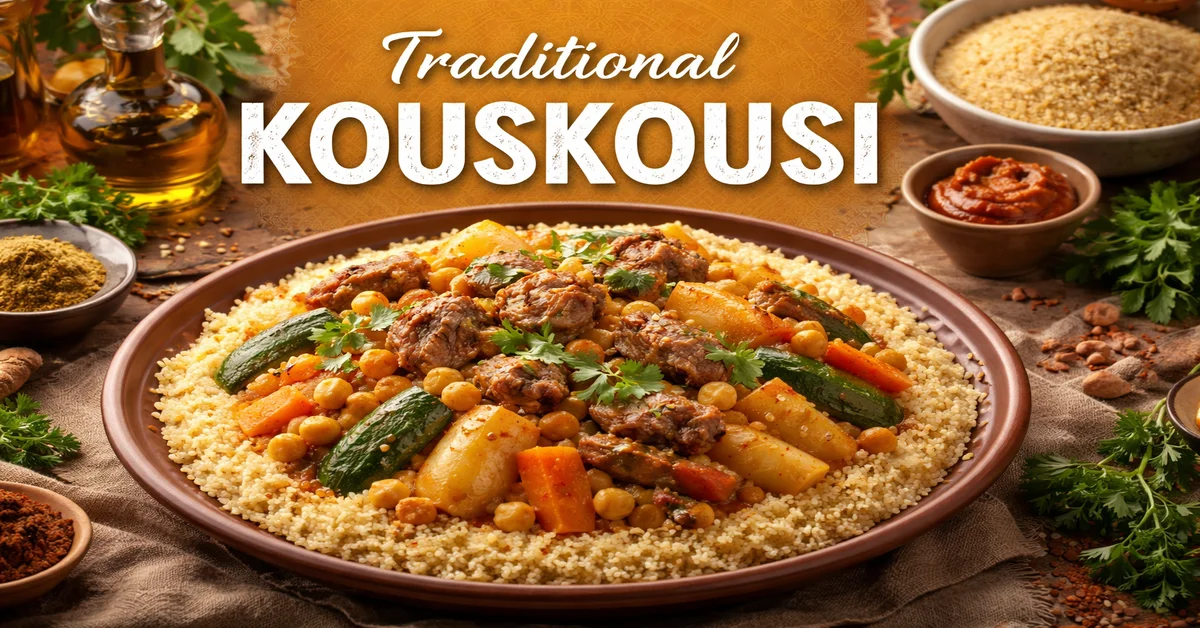
Kouskousi is a traditional semolina-based dish rooted in North African kitchens — a tender, steamed granule made from durum wheat that serves as the base for countless hearty meals. Often used interchangeably with the word couscous, Kouskousi shines when paired with slow-cooked vegetables, braised lamb or chicken, chickpeas, and richly spiced broths. Its appeal lies in a delicate, fluffy texture that soaks up flavors and invites communal sharing.
In recent decades Kouskousi has traveled far beyond Maghreb tables into global restaurants and home kitchens thanks to its versatility, nutritious profile, and the rising appetite for authentic, heritage foods. Chefs and home cooks alike praise Kouskousi for being quick to prepare (with modern shortcuts), yet extremely satisfying when done traditionally — an edible bridge between convenience and culture that modern eaters love.
RELATED: Sciaticream: Review, Fast, Gentle Sciatic Nerve Relief
What Is Kouskousi?
At its core, Kouskousi means small, rolled granules of durum semolina — essentially a kind of pasta made from coarsely ground durum wheat. It’s often described as a “steamed grain dish,” though technically it’s a form of pasta turned into tiny pearls. The name and pronunciation vary across regions, but the culinary role remains consistent: a neutral, absorbent base for savory stews and aromatic sauces.
Is Kouskousi the Same as Couscous?
Practically speaking, yes — Kouskousi and couscous are the same family of food. Regional dialects and transliterations produce different spellings like kouskousi, kuskusi, or koskosi, but they point to the same semolina pearls. Some distinctions are more about preparation style (Moroccan fine granules vs. larger “pearl” types) than a fundamental difference in ingredient.
The Origin and History of Kouskousi
Ancient Roots of Kouskousi
Kouskousi has ancient roots in Northwest Africa. Evidence of couscous-type cooking tools and practices dates back many centuries, and culinary historians often trace the dish to Berber (Amazigh) communities in what is today Algeria and Morocco. This long history explains how Kouskousi became a durable culinary tradition — evolving in technique but remaining a daily staple.
Berber and North African Influence
The Berbers (Amazigh people) developed unique grain processing and steaming techniques that made semolina suitable for long storage and joyful feasts alike. Their cooking methods — including slow stews and steaming over simmering pots — shaped how Kouskousi is consumed across the Maghreb. These traditions were refined into social rituals and communal meals that continue to define the dish’s cultural meaning.
Cultural Evolution Over Time
Over centuries Kouskousi spread across North Africa and into the Mediterranean and West Africa, adapting to local produce and tastes. It migrated with trade routes, regional migrations, and family recipes, absorbing spices like cumin, coriander, harissa, and turmeric. In 2020 this shared cultural practice was recognized internationally, bringing renewed respect to the communities that preserved it.
Kouskousi in North African and Mediterranean Cuisine
Role in Traditional Meals
Kouskousi is the star of both everyday family dinners and grand festival feasts. It often anchors communal platters where people gather around a single dish — a powerful expression of hospitality and togetherness. Served with vegetables and meat stews, it provides comfort, fullness, and a canvas for bold North African flavors.
Regional Variations of Kouskousi
Across Morocco, Algeria, Tunisia, Libya, and neighboring regions, variations differ by grain size, chosen proteins, and spice blends. Moroccan Kouskousi tends to be light and fluffy, while other regions may prefer heartier textures or distinct spice profiles. Ingredients reflect local crops: lamb in some areas, chicken or fish where those proteins are more accessible.
Festive and Everyday Uses
Whether for a weekday lunch or a wedding celebration, Kouskousi adapts. On special days it’s dressed with lavish broths, dried fruits, and a mosaic of vegetables; on ordinary days it’s a simple yet nourishing plate. Its flexibility makes it essential to Maghrebi culinary identity.
Ingredients Used in Kouskousi
Semolina and Durum Wheat
The central ingredient is semolina — coarsely ground durum wheat. Semolina gives Kouskousi its structure and slightly nutty taste. In whole-grain forms it provides protein, fiber, and essential B vitamins, making it more than just a comforting carb. Health sources note semolina’s nutrient density and role in balanced diets.
Vegetables and Legumes
Common additions include carrots, zucchini, turnips, and tomatoes, often simmered until meltingly tender. Chickpeas are a staple legume added for texture and protein, creating a satisfying vegetarian or mixed-protein bowl.
Spices and Flavor Enhancers
Kouskousi recipes typically feature a fragrant spice palette: cumin, coriander, turmeric, and sometimes harissa for heat. Olive oil finishes many dishes, boosting mouthfeel and flavor depth.
Meat and Plant-Based Options
Traditional recipes often pair Kouskousi with lamb or chicken, slow-cooked to tender perfection. Yet plant-based versions are equally common — chickpea and vegetable stews produce layers of flavor without meat, making Kouskousi ideal for modern vegetarian and vegan diets.
How Kouskousi Is Traditionally Prepared
Steaming Method Explained
Traditional Kouskousi is steamed using a couscoussier — a two-tiered pot where the stew simmers below and steam cooks the semolina above. This method produces light, separated grains that soak up broth flavor without becoming soggy. The steaming process may be repeated several times, with fluffing between each steam to achieve the perfect texture.
Traditional Cooking Tools
Beyond the couscoussier, artisans used wooden bowls and specific hand techniques to roll semolina into uniform granules. These tools and tactile steps are part of the craft — passed down through generations.
Modern Cooking Adaptations
Many cooks now use instant couscous or steaming baskets for convenience. While shortcuts work well, replicating the multi-steam process or adding a splash of olive oil and chilled water between steams brings you closer to the authentic fluffy texture.
Step-by-Step Guide: How to Cook Kouskousi at Home
Ingredients List
- 2 cups fine semolina (Kouskousi/couscous)
- 2 cups hot water or broth
- 2 tbsp olive oil or butter
- 1 tsp salt
- Optional: roasted vegetables, chickpeas, shredded lamb/chicken, harissa
Preparation Steps
- Place semolina in a large bowl. Sprinkle salt and drizzle oil.
- Slowly pour hot water or broth while gently stirring to moisten (not mush). Cover and let rest for 5–10 minutes.
- Fluff with a fork or rub between palms to separate grains. For deeper authenticity, steam in a couscoussier for 10–15 minutes, then fluff again. Repeat if desired.
- Serve with a rich vegetable and meat stew or a vibrant vegetable ragout.
Cooking Tips for Perfect Texture
- Use broth instead of plain water for extra flavor.
- Avoid pouring too much water at once — semolina should absorb gradually.
- Fluffing is essential: break up lumps by hand or fork for a featherlight finish.
- Resting time improves texture and allows grains to plump uniformly.
Kouskousi vs Couscous: Key Differences and Similarities
Texture and Taste Comparison
The taste between Kouskousi and couscous is virtually identical: a mild, slightly nutty flavor. Texture variations depend on granule size — Moroccan (fine) is light and fluffy; Israeli (pearl) is firmer and chewier. Home cooks should choose the type that best suits the stew or salad they plan to serve.
Cultural Naming Differences
Different languages and dialects influence naming: “kouskousi” is a regional variant in spelling or pronunciation. What changes more frequently is preparation, accompaniments, and ritual — not the dish’s essence.
Which One Should You Choose?
For salads and quick sides, fine Moroccan-style Kouskousi works best. For pilafs or robust stews, larger granules hold up better. Your choice should match the desired mouthfeel and presentation.
Nutritional Value of Kouskousi
Calories and Macronutrients
Cooked Kouskousi provides moderate calories and macronutrients appropriate for balanced diets. A typical value is around 110–176 calories per 100 g / per cup cooked, with carbohydrates dominating, a modest amount of protein, and minimal fat when prepared without added oils. These values can vary with preparation and toppings.
Health Benefits
Because semolina is derived from durum wheat, Kouskousi contributes complex carbohydrates and some protein. When paired with vegetables and legumes, it becomes a nutrient-dense, fiber-rich meal that supports steady energy release and satiety.
Is Kouskousi Good for Weight Management?
When portioned sensibly and served with vegetables and lean proteins, Kouskousi can be part of a weight-management plan. Its satisfying texture reduces overeating, while its whole-grain versions offer more fiber, aiding digestion and fullness.
Health Benefits of Eating Kouskousi
Digestive Health
Whole-grain semolina contains fiber and minerals that support healthy digestion. Paired with legumes, Kouskousi meals promote gut health and regularity.
Energy and Metabolism
Durum wheat is rich in B vitamins and complex carbs, offering sustained energy — ideal for active days. Its carbohydrate profile helps refill glycogen stores without the sugar spikes that refined carbs may cause.
Heart-Healthy Qualities
When prepared with olive oil and vegetables, Kouskousi dishes align with heart-healthy Mediterranean principles: healthy fats, fiber, and antioxidant spices like turmeric and coriander that support cardiovascular well-being.
Kouskousi for Different Diets
Kouskousi naturally fits vegetarian and vegan diets. Chickpea and vegetable stews provide protein and texture, making the dish both wholesome and plant-powered.
Given its North African roots, Kouskousi is commonly prepared in halal households and fits seamlessly into various cultural dietary practices that emphasize communal and festive meals.
Standard Kouskousi is made from durum wheat and contains gluten. For gluten-free alternatives, cooks use millet, corn, or rice couscous substitutes, though flavors and textures will differ from the traditional semolina product.
Popular Kouskousi Variations Around the World
Morocco favors delicate, fine-grained Kouskousi served with a rich, spiced vegetable stew, sometimes accompanied by tender meat or fragrant preserved lemon. The Moroccan approach emphasizes balance — bright citrus, warm spices, and a silky stew.
Algeria and Tunisia feature regional spice profiles and pairings: Tunisian Kouskousi often includes harissa for heat, while Algerian bowls might emphasize lamb and hearty root vegetables. Each region layers traditional tastes with local ingredients.
Contemporary chefs fuse Kouskousi with global ingredients — roasted Mediterranean vegetables, za’atar seasoning, or even Asian-inspired sauces — showcasing the dish’s incredible versatility and universal appeal.
How Kouskousi Is Served
Traditionally served in a large communal bowl, Kouskousi invites sharing. The semolina forms a base, with stew ladled over and garnishes like fresh herbs, olive oil, or preserved lemon added for brightness.
Side dishes such as simple salads, flatbreads, olives, and yogurt sauces complement the dish’s warmth. Pickles and spicy condiments like harissa add texture and contrast.
Rich broths — often tomato-based with cumin and turmeric — pair beautifully with Kouskousi. The grains absorb broth flavors, creating harmonious bites with every forkful.
Why Kouskousi Is More Than Just Food
Cultural Identity and Heritage
Kouskousi is a vessel for cultural memory. In the Maghreb, it’s woven into rites of passage, communal tables, and holiday traditions — an edible archive of identity and history. UNESCO’s recognition highlights its value beyond mere sustenance.
Family and Community Traditions
Preparing Kouskousi is often a collaborative ritual: hands at work rolling semolina, elders leading the technique, and families gathering to share. The dish binds generations through taste and tradition, making each recipe a cherished legacy.
RELATED: Vçç: What It Means, Why It Matters (Technical & Cultural Guide)
Frequently Asked Questions About Kouskousi (FAQ)
What does Kouskousi taste like?
Mild and slightly nutty on its own — it’s built to take on the flavors of broths, spices, and toppings.
Is Kouskousi healthy?
When made with whole-grain semolina and paired with vegetables and lean protein, Kouskousi is nutritious — offering complex carbs, some protein, fiber, and B vitamins.
How many calories are in Kouskousi?
Cooked Kouskousi ranges roughly from 110–176 calories per 100 g / per cup cooked depending on preparation and additions.
How is Kouskousi different from couscous?
They’re essentially the same — differences are regional names, grain sizes, and preparation traditions rather than separate foods.
Summary
Kouskousi is a simple yet extraordinary dish: ancient in origin, adaptable in style, nutritious when balanced, and deeply rooted in Maghrebi culture. Its light texture, ability to soak up vibrant stews, and communal nature make it both a comforting home meal and a showstopping dish for guests.
Today Kouskousi sits comfortably at the crossroads of tradition and innovation. Whether you follow a time-honored couscoussier method or prepare a quick, modern bowl, Kouskousi rewards patience and creativity. Discover it, cook it, share it — and you’ll taste centuries of heritage in every forkful.